


The Rise of Social Casino Games: Entertainment Beyond Reality
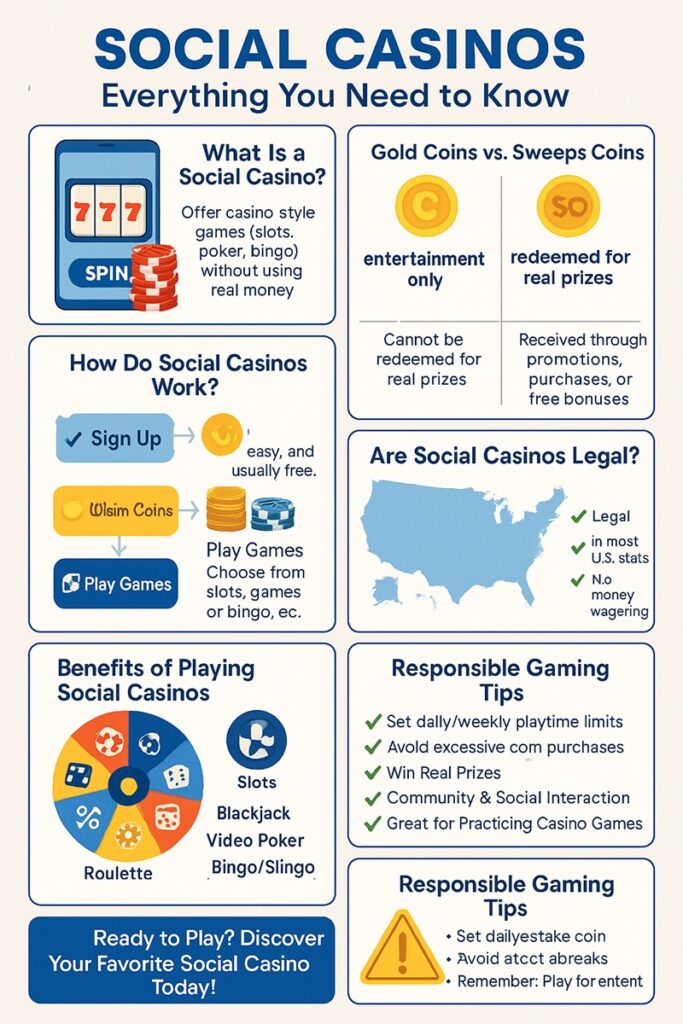
Social casino games have taken the gaming world by storm, providing players with a unique blend of social interaction and casino-style gaming. These games are designed to simulate the experience of real casino games without the risk of losing real money, making them appealing to a broad audience. Millions of players worldwide engage in these experiences, whether through mobile apps or social media platforms, creating vibrant communities. To understand social casino games how do social casinos work, we need to delve into what makes these games so enticing, the technology behind them, and their impact on the gaming industry.
What are Social Casino Games?
Social casino games are online games that mimic traditional casino gaming experiences, such as slot machines, poker, blackjack, and roulette. However, unlike traditional casinos, they do not offer real monetary prizes. Instead, players use virtual chips or in-game currency, which can be earned through gameplay or purchased. These games integrate heavy social elements, allowing players to connect with friends, share achievements, and even compete against each other in various formats.
The Mechanics of Social Casino Games
At their core, social casino games are designed to be easy to pick up and play. Here are some key mechanics that define these games:
- Free-to-Play Model: Most social casino games operate on a free-to-play basis, allowing users to download the game and start playing without an initial investment. In-game purchases facilitate revenue generation for developers.
- Social Features: These games heavily incorporate social elements, including friend lists, challenges, and leaderboards. Players can interact with friends, send gifts, and engage in friendly competition.
- Virtual Currency: Players earn or purchase virtual currency that can be used to play games, buy virtual goods, or unlock new features. This currency typically cannot be converted back into real money.
- Rewards and Incentives: To keep players engaged, social casino games often provide daily bonuses, challenges, and events that encourage regular play.
The Popularity of Social Casino Games
The surge in popularity of social casino games can be attributed to several factors:
- Accessibility: Available on various platforms, including smartphones, tablets, and computers, these games are accessible to a wide audience. Players can enjoy gaming at their convenience, wherever they are.
- Community and Social Interaction: The social aspect of these games creates a sense of community, enabling players to connect with friends and meet new people. This interaction elevates the gaming experience beyond solitary play.
- Addictive Gameplay: Many social casino games utilize the psychology of gambling without financial risk, making them engaging yet safe. The thrill of spinning a virtual slot machine or winning a hand of poker keeps players returning for more.
Impact of Social Casino Games on the Gaming Industry
The rise of social casino games has significantly impacted the broader gaming industry:
- Revenue Generation: Social casinos, leveraging in-app purchases and advertisements, have become a lucrative segment within the gaming market, generating billions in revenue each year.
- Influencing Game Design: Traditional game developers are learning from social casinos by incorporating more social elements and mechanics that foster community and interaction.
- Changing Perceptions of Gambling: Social casino games have altered how people view gambling. They provide a no-risk environment and allow players to enjoy the thrill of casino games without the implications of gambling addiction.
Future of Social Casino Games
As technology evolves, the future of social casino games looks promising. Here are a few trends to watch for:
- Virtual Reality (VR) and Augmented Reality (AR): The integration of VR and AR could transform social casino games into fully immersive experiences where players can step into a virtual casino and interact with their surroundings and other players in real-time.
- Increased Regulation: As with any industry that involves gamification and interaction, there will be increasing scrutiny and regulation. Developers will need to ensure their games promote responsible gaming practices.
- Enhanced Personalization: Using data analytics and machine learning, future social casino games will likely deliver more personalized experiences to users based on their preferences and play styles.
Conclusion
Social casino games have carved out a substantial niche within both the gaming and social media landscapes. By blending social connectivity with the excitement of gaming, they have introduced a new way for people to engage online. With continued innovation and increased social interaction, the future of social casino games promises to be as exciting as the games themselves. As we move forward, understanding the balance between entertainment and responsible engagement will be crucial for both players and developers alike.


